Why I started designing AURA
Every design project starts with a problem worth solving. For AURA, that problem came from watching how invisible caregiving labor really is. Caregivers aged 35–60 are often managing a home, a family, and their own wellbeing at the same time — with no system that accounts for how exhausting that balancing act actually is.
The more I researched, the clearer the pattern became: existing task and productivity tools are built for work, not for the emotional and physical weight of caregiving. That gap became the starting point for AURA.
Defining the problem
Before opening Figma, I spent time framing the problem precisely, because a vague problem statement leads to a vague product. What I landed on was this:
Caregivers need a way to balance personal rest with daily responsibilities — and their current struggle to do so is contributing to emotional exhaustion and poor sleep.
This framing mattered. It shifted AURA from "another to-do list app" into something with a clearer job: help people protect rest, not just track chores.
Research and early exploration
I used FigJam early on to map out caregiver routines, pain points, and emotional friction points throughout a typical day. A few things stood out:
- Rest is treated as optional, not scheduled
- Task-sharing within a household is often unfair or invisible
- Mental load is rarely accounted for by traditional productivity tools
These insights shaped AURA's core principle: tasks and rest need to live in the same system, not separate ones.
From research to interface
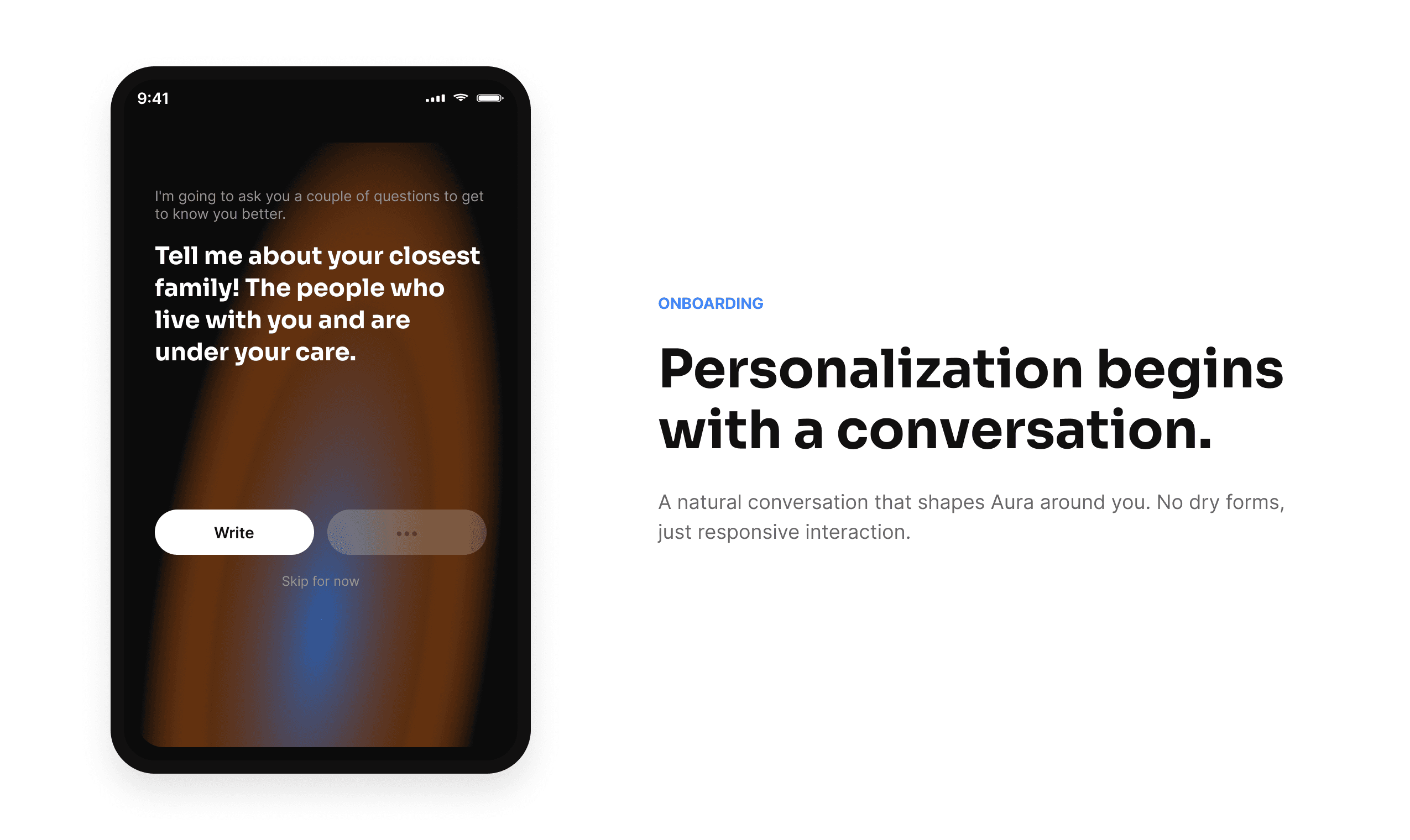
Moving into Figma, I focused on keeping the interface calm and low-friction — deliberately, since the target user is often already mentally overloaded. Bright, busy dashboards would work against the goal, not support it.
Instead of just listing tasks, AURA's interface is designed around fairness and balance:
- Surfacing when someone is carrying too much
- Nudging rest into the day as its own kind of task
- Making shared responsibilities visible, not assumed
Where the project stands now
AURA is still an evolving case study — I'm continuing to refine flows and visual design before calling it final. But even at this stage, it's already shaped how I think about design: not every problem needs more features, sometimes it needs more fairness built into the system.
More on this project soon — including full flows and the final UI.